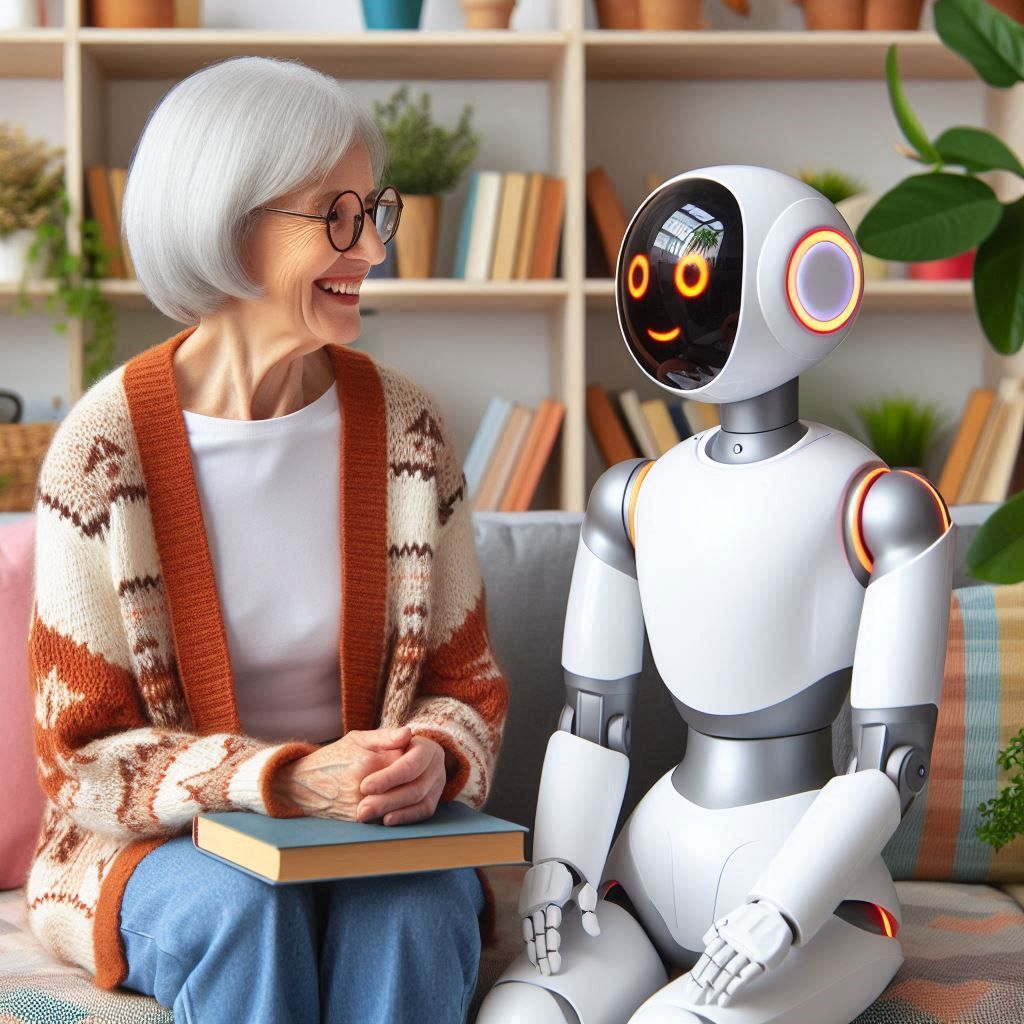
I have read quite a bit about AI and how it is used in various fields, but mainly been focusing on social service. In service provision there are lots of possibilities to use AI. Chatbots of different kinds are probably the most obvious and apparent application. At least it is the one that users most easily notice. If AI is used in the processes of handling documents without real-time interaction, it is almost impossible for the client/customer/user to notice it. There are many uses that are invisible for the client, like how people in queue could be prioritized.
Among others, I happened to read the article ”AI Chatbots in Social Services” in the Stanford Social Innovation Review (SSIR), which discusses the potential and challenges of using AI chatbots in social services. The article is worth writing about as it provides a good example of key questions.
One of the most pressing is the responsible use of AI is of growing concern and interest. This makes efforts like Z-inspection highly needed. Z-inspection is a globally recognized methodology for evaluating ethical risks and challenges related to artificial intelligence. The methodology is based on interdisciplinary collaborations and includes experts from various fields to ensure that AI solutions are responsible and ethically defensible. By using Z-inspection, organizations can better understand the ethical implications of their AI projects and work to minimize the risks of negative consequences.
But back to the article in SSIR. It argues that AI chatbots can be a valuable tool but emphasizes the importance of using them responsibly to avoid negative consequences. This is certainly a point of view I can agree with. The article highlights the crucial role of human contact in social services and advocates for AI chatbots to complement, not replace, human interaction. This is likely one of the most important, if not the most important, reasons why AI is only a tool. One could perhaps express it by saying that the unique selling point (USP) for social workers and social work is explicitly the human contact. To see the individual as a whole and not just get stuck in processing a case automatically solely based on strictly mathematical (probability-based) rules.
That said, one can still argue, as the article does, that AI chatbots are a valuable tool. The article highlights the potential of AI chatbots to streamline and improve social services. They can be used to provide information and support to those in need, automate tasks such as scheduling and case handling, and provide faster and more accessible service. The argument for AI is that this can free up resources and personnel, allowing for more time for complex cases and personal contact where it is truly needed.
But the main point must still be the importance of responsible use. The warns of potential risks and challenges. It emphasizes that AI chatbots can contain biases, lack the empathetic ability that is crucial in social work, and must not replace human contact. The argument is that careful design, testing, and evaluation are necessary to ensure that the chatbots are fair, reliable, and complement human interaction in a positive way. Data protection and ethical considerations in the use of AI are also highlighted.
The conclusion is that AI chatbots can function as complements, not replacements, for social workers. The article underlines that human contact is crucial in social services for building trust and providing adequate support. AI chatbots should therefore be seen as a complement, not a replacement, to human interaction. The argument is that chatbots can handle simpler questions and tasks, giving staff more time for individuals who need more personal support and complex interventions. It is about finding a balance where technology can enhance but not undermine the human aspect of social services.
In summary, the article emphasizes that AI chatbots have the potential to improve social services, but it requires a conscious and responsible approach. By focusing on ethical design, careful implementation, and above all, by seeing them as a complement to human interaction, AI chatbots can become a valuable tool to strengthen and streamline social services. This ties into why I have been interested in the work being done for the ethical use of AI, especially the work done within the framework of Z-inspection. I am happy to be a member of the Advisory bord.
 Georg Henrik Wrede
You must be logged in to post a comment.